Uttarakhand · North
Badrinath Temple
Badrinarayan Temple
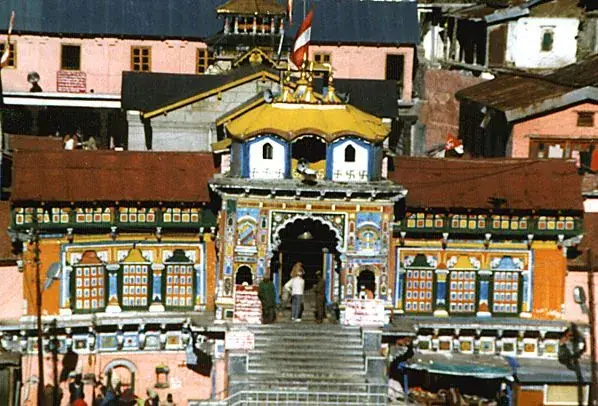
Badrinath, one of the four Char Dham and a Divya Desam revered by Sri Vaishnava tradition, occupies a narrow valley between the Nar and Narayan ranges at 3,100 metres. Adi Shankaracharya is credited with recovering the black-stone image of Badrinarayan from the Alaknanda river and reestablishing worship here in the 9th century; the present structure, repeatedly rebuilt after avalanche and earthquake damage, dates largely to Garhwal-dynasty patronage. Unlike the plain stone Kedarnath, Badrinath's roof is brightly painted in the Himalayan style found across the valley, reflecting shared building traditions with nearby Tibetan-influenced shrines. Pilgrims bathe in the naturally hot Tapt Kund springs before entering, and the temple closes completely each winter as snow seals the valley for six months.
Art & Architecture
- Brightly painted conical roof distinct from stone Himalayan temples nearby
- Black stone Badrinarayan idol under a gilded canopy
- Tapt Kund hot sulphur springs at the temple's base
- One of the 108 Divya Desams sacred to Vaishnavites
Best Season
Festivals
Badrinath opening ceremony · Mata Murti Ka Mela · Badri-Kedar Utsav
Journeys Featuring This Temple
Planning your visit
Nearby
Guesthouses and dharamshalas near the temple often take walk-ins. Confirm a single-occupancy rate when you call.
- HotelinBadrinath14 m
From Overture Maps — not verified by us (2026-08-02)
- Hotel Patliputra141 m
From Overture Maps — not verified by us (2026-08-02)
- Jagirdar Guest House149 m
From Overture Maps — not verified by us (2026-08-02)
- Uttrakhand Khadi Gram Udhyog Ashram169 m
From Overture Maps — not verified by us (2026-08-02)
- Rupali Guest House225 m
From Overture Maps — not verified by us (2026-08-02)
- Hotel Pinnacle Peaks - Badrinath225 m
From Overture Maps — not verified by us (2026-08-02)
Listings drawn from third-party maps are not verified by us and may be out of date. Please confirm directly before you travel.
Sources