Maharashtra · West
Elephanta Caves
Gharapuri Caves
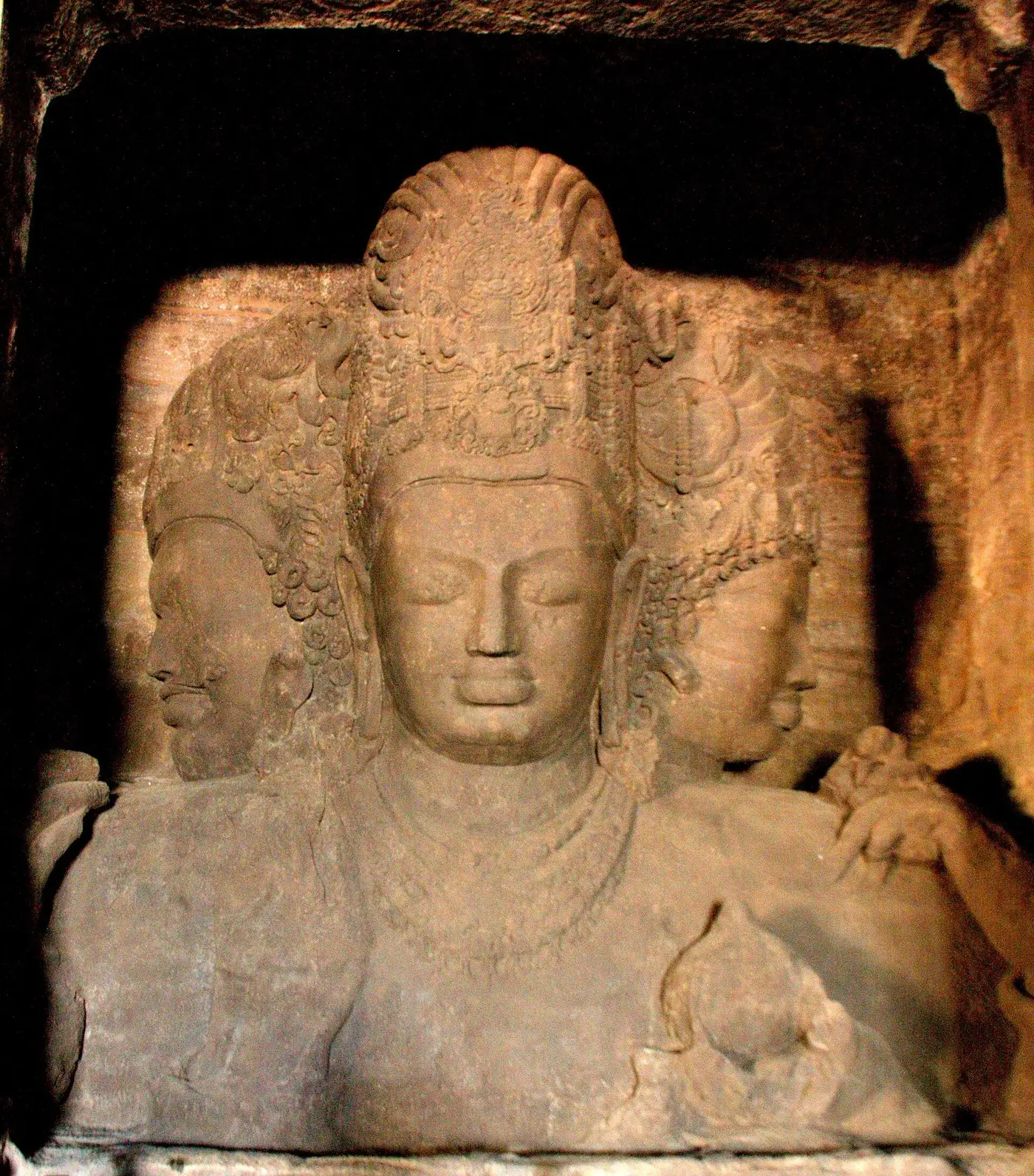
Carved into basalt cliffs on an island in Mumbai harbour between roughly the 5th and 7th centuries, likely under a combination of Kalachuri and Chalukya patronage, the Elephanta Caves form one of the most refined bodies of rock-cut Shaiva sculpture in India. Their centrepiece, the Sadashiva or Trimurti bust, presents Shiva in three composite faces expressing creation, preservation and destruction, carved at a scale and level of finish that places it among the great achievements of early medieval Indian art. Surrounding panels render key episodes of Shiva mythology — his cosmic dance, his androgynous Ardhanarishvara form, his marriage to Parvati — within a columned hall whose proportions and lighting were carefully planned for dramatic effect. Portuguese colonists, who gave the site its European name after a stone elephant since relocated to Mumbai, caused some damage through target practice, but the caves were inscribed as a UNESCO World Heritage Site in 1987 and remain a short ferry ride from the Gateway of India.
Art & Architecture
- Sadashiva (Trimurti) bust, a nearly 6-metre triple-faced Shiva image regarded as a masterwork of Indian rock-cut sculpture
- Main cave laid out as a pillared hypostyle hall with subsidiary shrines to Shiva's mythic forms
- Rock-cut panels depicting Nataraja, Ardhanarishvara, and Kalyanasundara (Shiva-Parvati marriage)
- Island setting reached only by boat, isolating the caves from the modern city skyline visible across the harbour
Best Season
Festivals
Elephanta Festival (classical music and dance)
Journeys Featuring This Temple
Planning your visit
Nearby
Guesthouses and dharamshalas near the temple often take walk-ins. Confirm a single-occupancy rate when you call.
- The Gordon House Hotel11.3 km
On Battery Street off Apollo Bandar in Colaba, a few minutes' walk from the Gateway of India jetty where the Elephanta ferries leave; floors are themed Scandinavian, English Country and Mediterranean, and its All Stir Fry restaurant has a noodle bar.
Checked by us
- Bentleys Hotel11.7 km
A 1920s colonial building at 17 Oliver Road, off Garden Road in Colaba, walkable to the Gateway ferry; rooms from about Rs 3,500 with breakfast, and it accepts pets.
Checked by us
- Hotel Marine Plaza11.9 km
Marine Drive address at the Nariman Point end, sea-facing rooms and a glass-bottomed terrace pool; a short taxi ride round the bay to the Gateway jetty rather than a walk.
Checked by us
- JNPT Guest House3.9 km
From Overture Maps — not verified by us (2026-08-02)
- NB Nature Stay6.6 km
From Overture Maps — not verified by us (2026-08-02)
- Sagrika Resort6.7 km
From Overture Maps — not verified by us (2026-08-02)
Listings drawn from third-party maps are not verified by us and may be out of date. Please confirm directly before you travel.
Sources