West Bengal · East
Kalighat Kali Temple
Kalighat Temple
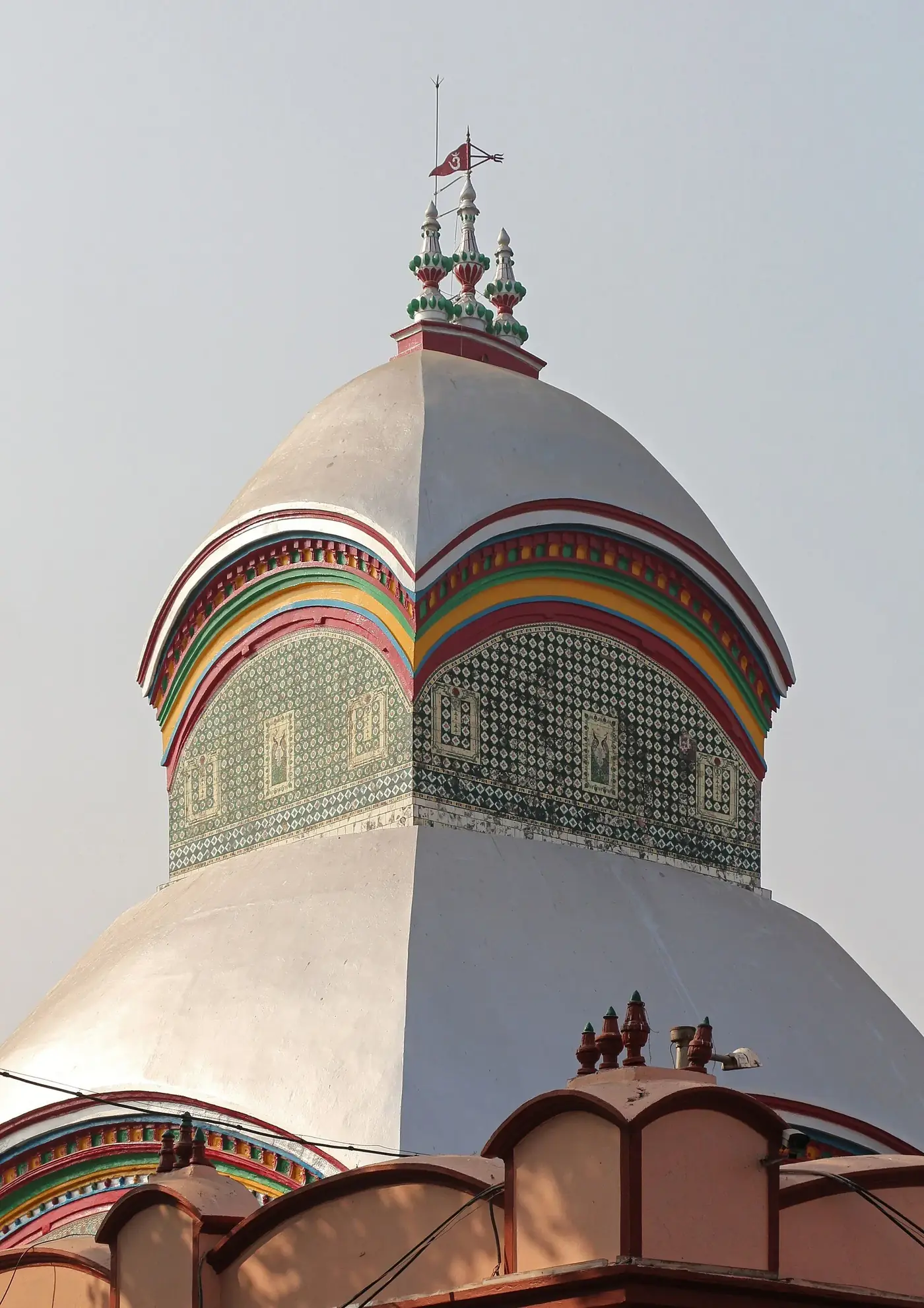
Though the present structure dates only to 1809, Kalighat occupies a shrine site of much greater antiquity and is counted among the 51 Shakti Peethas, the spot traditionally associated with the fall of Sati's toe. The presiding image, a fierce three-eyed Kali face with a protruding golden tongue and no conventionally sculpted limbs, is worshipped in a form distinct from the more naturalistic imagery elsewhere in India, reflecting Bengal's particular Shakta iconographic tradition. The temple, from which Kolkata (originally 'Kalikata') is popularly said to take its name, sits amid a dense pilgrim bazaar and riverside ghat that has functioned continuously for centuries. It remains one of eastern India's most visited Shakti shrines and a mandatory stop on any serious Kolkata pilgrimage route.
Art & Architecture
- One of the 51 Shakti Peethas, associated with the fall of Sati's toe
- Distinctive Kali image with three large eyes and a golden tongue, carved without conventional limbs
- Navaratna-influenced tower typical of 19th-century Bengali temple rebuilding
- Dense surrounding bazaar and ghat complex reflecting centuries of continuous urban pilgrimage
Best Season
Festivals
Kali Puja · Durga Puja
Journeys Featuring This Temple
Planning your visit
Nearby
Guesthouses and dharamshalas near the temple often take walk-ins. Confirm a single-occupancy rate when you call.
At 15 Jawaharlal Nehru Road on Chowringhee, so you trade the 10-minute cab ride south to Kalighat for a base beside the Maidan and Park Street.
Checked by us
- Taj Bengal, Kolkata2.2 km
The nearest five-star to Kalighat, in Alipore beside the zoo — close enough to reach the temple before the morning queues build.
Checked by us
- Gayatri Hotel-Malti Ray Chowk196 m
From Overture Maps — not verified by us (2026-08-02)
- Nisha Hotel286 m
From Overture Maps — not verified by us (2026-08-02)
- OYO 2415 Saanti Vilas318 m
From Overture Maps — not verified by us (2026-08-02)
- Treebo Trend Globe International331 m
From Overture Maps — not verified by us (2026-08-02)
Listings drawn from third-party maps are not verified by us and may be out of date. Please confirm directly before you travel.
Sources