Kerala · South
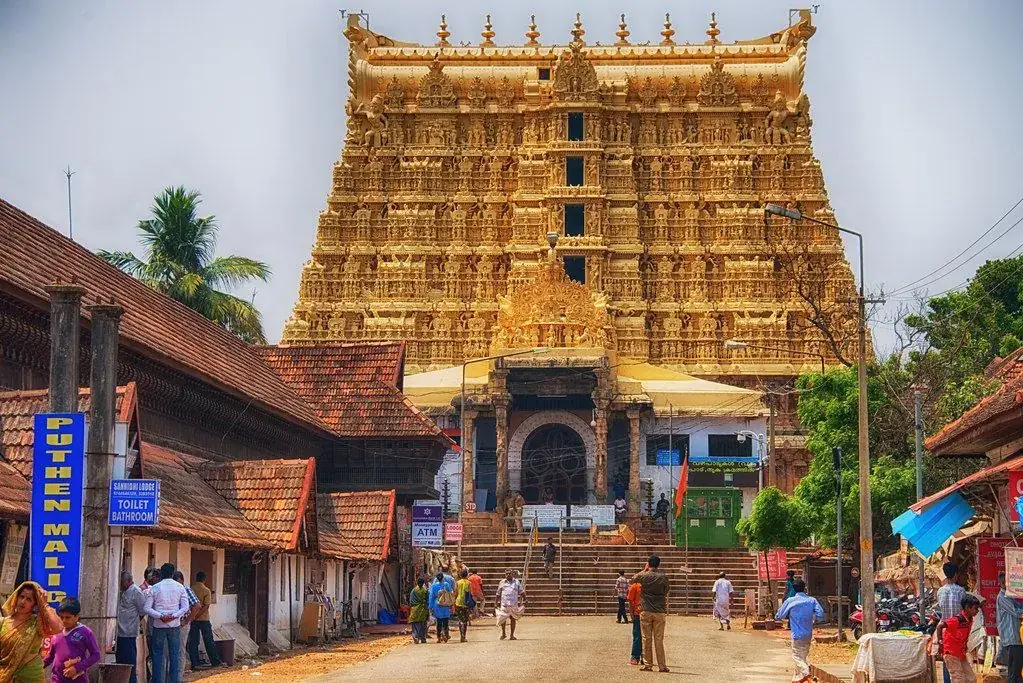
Sree Padmanabhaswamy Temple
Sree Padmanabhaswamy Temple's sanctum holds one of Hinduism's most striking iconographic arrangements: an eighteen-foot reclining Vishnu on the coiled serpent Ananta, viewed through three separate doorways corresponding to the deity's head, navel and feet. The present granite structure dates largely to Travancore-period rebuilding in the 1730s under Maharaja Marthanda Varma, who ceremonially gifted the kingdom to the deity, a political-religious act still reflected in temple protocol today. Kerala's distinctive gajaprishta roof style and dense narrative pillar carving define its architecture. Global attention followed the 2011 court-ordered opening of underground vaults revealing treasure valued in the billions of dollars, underscoring both the temple's historic royal patronage and its living orthodoxy, which restricts entry to practising Hindus in strict traditional dress.
Art & Architecture
- Vishnu enshrined reclining on the serpent Ananta, visible through three doors representing head, torso and feet
- Gajaprishta (elephant-back) style vimana roof distinctive to Kerala temple architecture
- Corridor of granite pillars carved in Kerala's dense narrative style, added under Travancore patronage in the 1730s
- Six sealed underground vaults discovered in 2011 containing one of the largest troves of temple treasure ever recorded
Best Season
Festivals
Painkuni Festival · Alpashy Festival · Navaratri
Journeys Featuring This Temple
Planning your visit
Nearby
Guesthouses and dharamshalas near the temple often take walk-ins. Confirm a single-occupancy rate when you call.
Clifftop resort on 67 acres above Kovalam beach, built around Halcyon Castle, the Travancore rulers' summer house; six restaurants and bars including The Tides on the sand.
Checked by us
- Mascot Hotel (KTDC)3.0 km
State-run heritage hotel at Mascot Square, built to house British officers in WWI; the closest full-service base to the museum quarter and about 3 km from the temple.
Checked by us
- SR Meridian168 m
From Overture Maps — not verified by us (2026-08-02)
- Roop Mahal Premier Inn263 m
From Overture Maps — not verified by us (2026-08-02)
- Saarang Tourist Home278 m
From Overture Maps — not verified by us (2026-08-02)
- RangaMaalika Heritage Residency311 m
From Overture Maps — not verified by us (2026-08-02)
Listings drawn from third-party maps are not verified by us and may be out of date. Please confirm directly before you travel.
Sources