Gujarat · West
Somnath Temple
Shri Somnath Jyotirlinga Temple
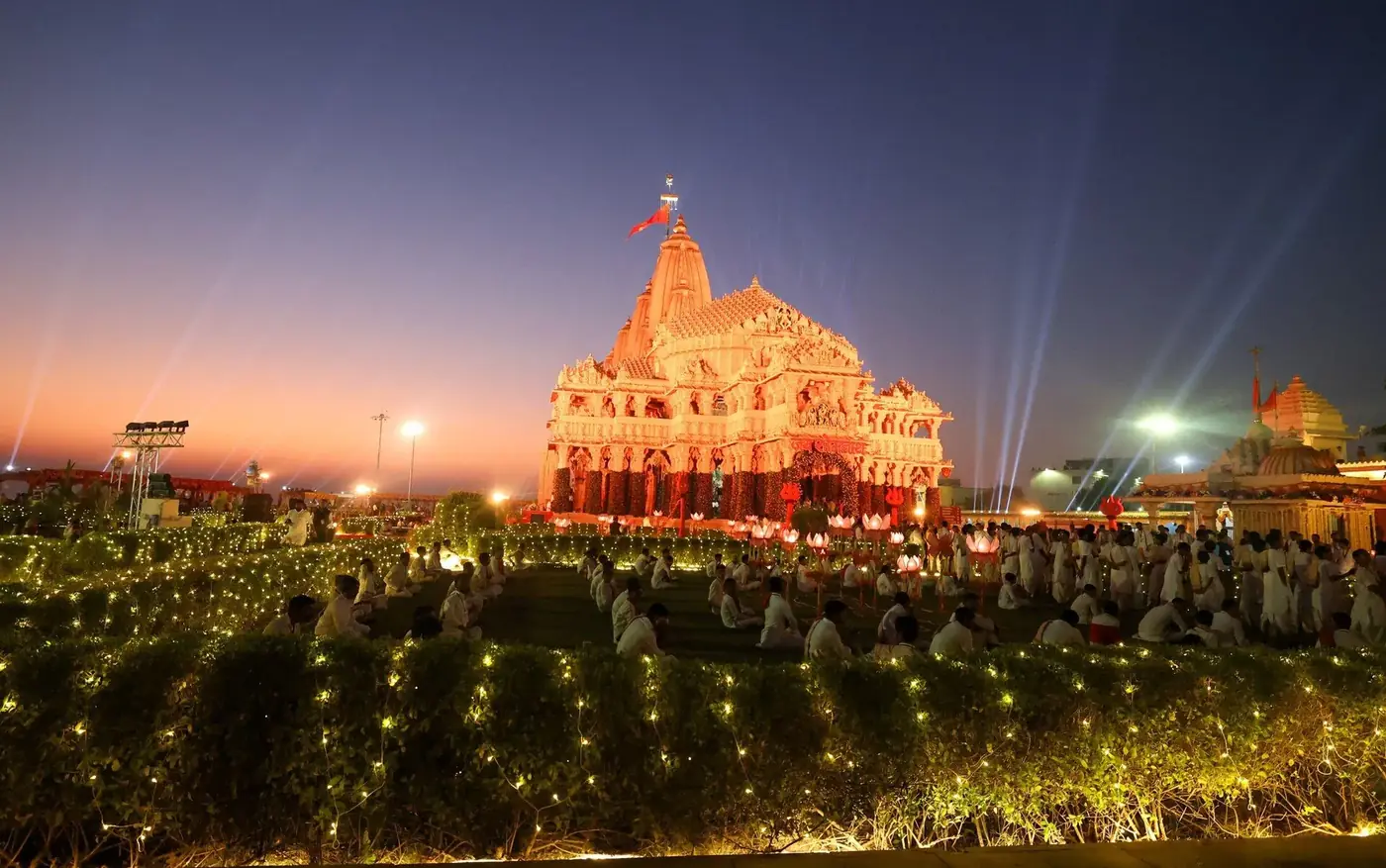
Somnath's temple history is a record of repeated destruction and rebuilding across a millennium, most famously the raids by Mahmud of Ghazni in 1026 and further demolitions into the Mughal period, making the coastal shrine as significant for what it represents historically as for its current fabric. The standing structure was reconstructed between 1947 and 1951 under Sardar Vallabhbhai Patel's initiative, using traditional Sompura stone-mason lineages to rebuild in Chalukya-Nagara style true to documented earlier forms rather than as a modern reinterpretation. On-site museums display salvaged carved fragments from the temple's earlier incarnations, giving visitors direct material evidence of its long architectural history. As one of the twelve Jyotirlinga shrines, and positioned where, per its Bana Stambha inscription, no landmass lies between the shore and Antarctica, Somnath carries weight as both a pilgrimage destination and a symbol of post-independence cultural restoration.
Art & Architecture
- Chalukya-style Nagara reconstruction (1951) reviving the temple's historically documented earlier forms
- Kirti Stambha and shikhara built to classical Hindu temple proportions under Sompura master masons
- Arrow-Pillar (Bana Stambha) marking the unobstructed sea sightline toward Antarctica
- Museum of recovered fragments from earlier demolished temple phases displayed on site
Best Season
Festivals
Maha Shivaratri · Kartik Purnima · Somnath sound and light show nightly
Journeys Featuring This Temple
Planning your visit
Nearby
Guesthouses and dharamshalas near the temple often take walk-ins. Confirm a single-occupancy rate when you call.
- Hotel shivaay106 m
From Overture Maps — not verified by us (2026-08-02)
- Hotel Metro135 m
From Overture Maps — not verified by us (2026-08-02)
- Sagar Darshan Guest House166 m
From Overture Maps — not verified by us (2026-08-02)
- Sagar Darshan Dham Atithi Gruh178 m
From Overture Maps — not verified by us (2026-08-02)
- Hotel Shri Radhe191 m
From Overture Maps — not verified by us (2026-08-02)
- Hotel Bhabha somnath - guj193 m
From Overture Maps — not verified by us (2026-08-02)
Listings drawn from third-party maps are not verified by us and may be out of date. Please confirm directly before you travel.
Sources