Maharashtra · West
Trimbakeshwar Shiva Temple
Trimbakeshwar Jyotirlinga Temple
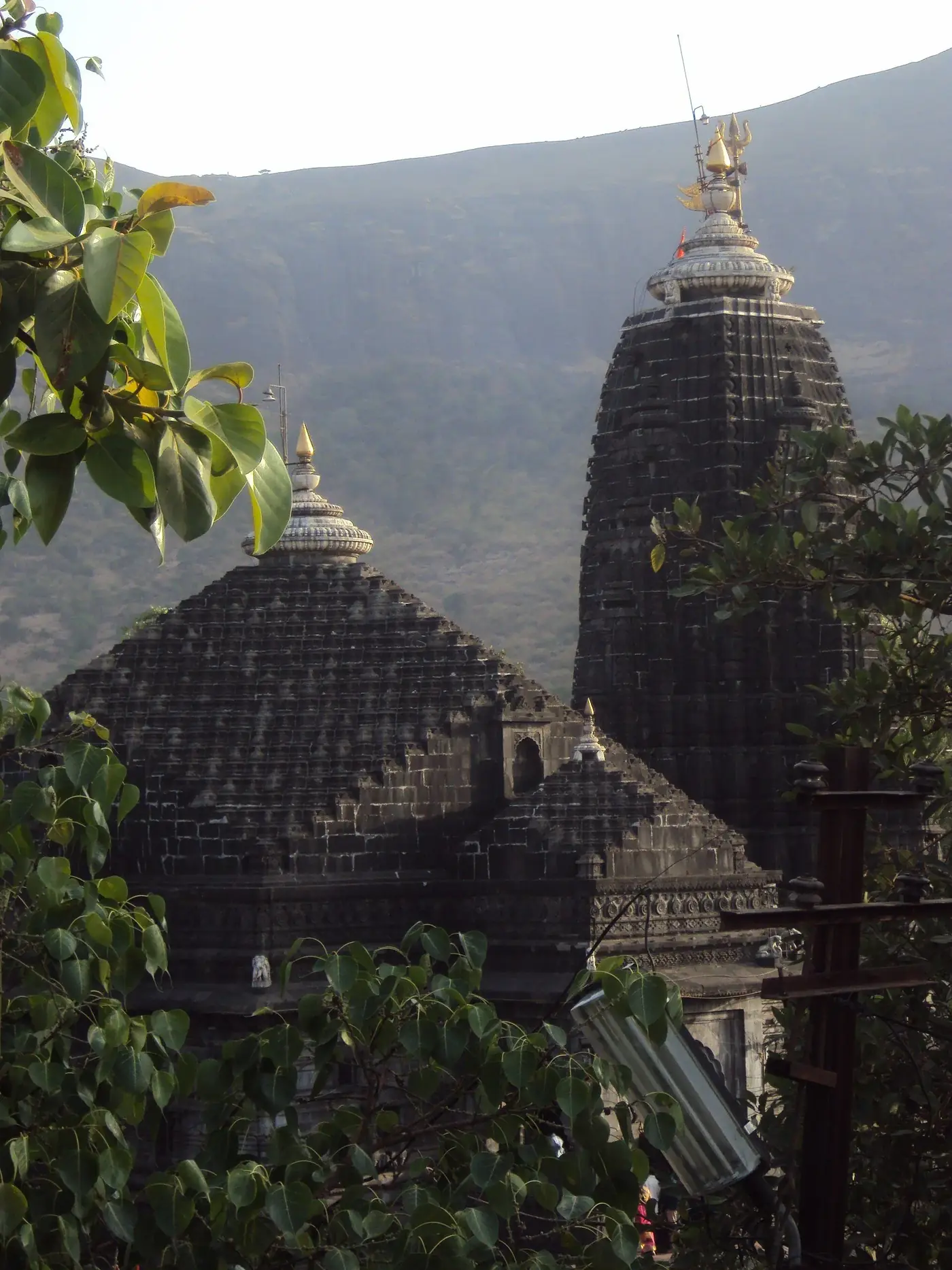
Rebuilt in black basalt between 1755 and 1786 by Peshwa Balaji Baji Rao, Trimbakeshwar stands near the source of the Godavari River at the foot of Brahmagiri hill and houses one of the twelve Jyotirlingas, distinguished by an unusual triple-faced linga representing Brahma, Vishnu and Shiva together rather than Shiva alone. Its Nagara shikhara and walls are covered near-continuously in relief carving typical of Maratha-period temple building, a dense decorative treatment executed in a notably hard, dark stone that has preserved crisp detail. As both a Jyotirlinga and the traditional source of the Godavari, the temple is intertwined with the wider Godavari pilgrimage circuit and hosts vast crowds during the Nashik–Trimbakeshwar Kumbh Mela, one of the four rotating Kumbh sites. Access to the inner sanctum is restricted, with the temple continuing several ritual practices, including a distinctive shraddha and Narayan Nagbali rite, tied specifically to this site.
Art & Architecture
- Black basalt Nagara shikhara built during the 18th-century Peshwa reconstruction
- Densely carved exterior wall panels covering the entire temple surface with figural and floral relief
- Rare triple-faced (Brahma-Vishnu-Shiva) linga housed within the sanctum
- Source point of the Godavari River at nearby Brahmagiri hill, integral to the temple's pilgrimage geography
Best Season
Festivals
Maha Shivaratri · Nashik-Trimbakeshwar Kumbh Mela (periodic)
Journeys Featuring This Temple
Planning your visit
Nearby
Guesthouses and dharamshalas near the temple often take walk-ins. Confirm a single-occupancy rate when you call.
- Trimbakeshwar Jyotirlinga @ Nashik...82 m
From Overture Maps — not verified by us (2026-08-02)
- Hotel Sai Yatri124 m
From Overture Maps — not verified by us (2026-08-02)
- Ankur Tiwari Hotel Dhruv Palace Trimbakeshwar155 m
From Overture Maps — not verified by us (2026-08-02)
- Hill view resort155 m
From Overture Maps — not verified by us (2026-08-02)
- Shvas Island Resort155 m
From Overture Maps — not verified by us (2026-08-02)
- Hotel MH15155 m
From Overture Maps — not verified by us (2026-08-02)
Listings drawn from third-party maps are not verified by us and may be out of date. Please confirm directly before you travel.
Sources